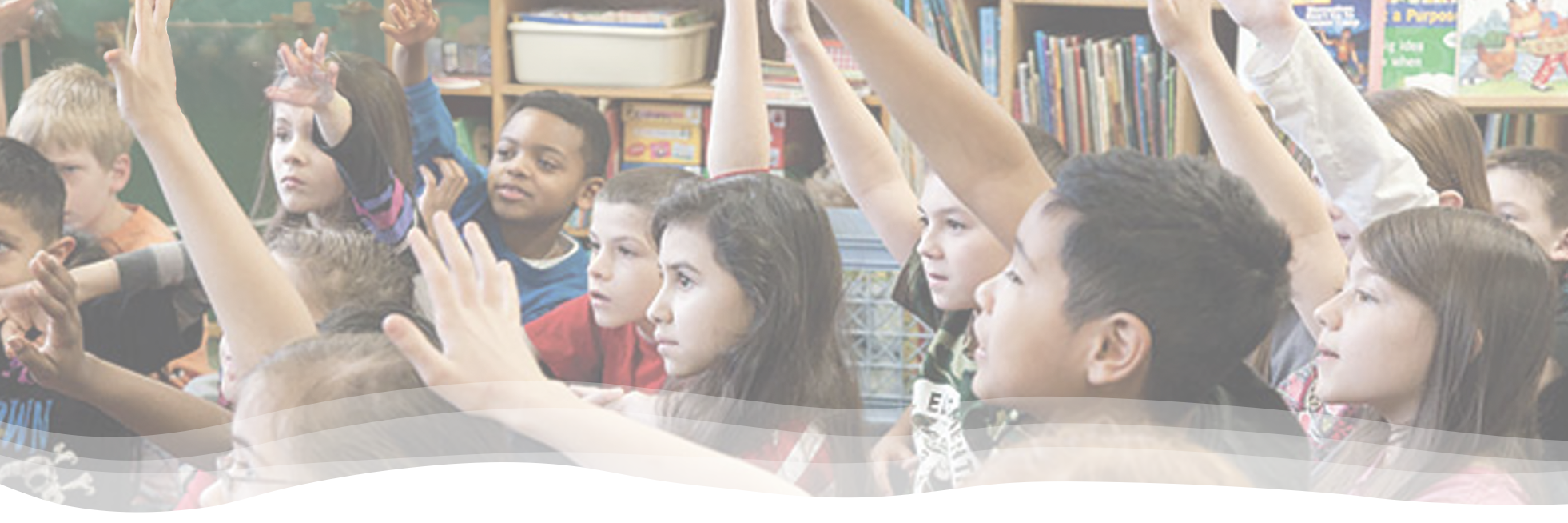
Being part of the TeknoLearn community is being part of a community of teachers focused on improving their teaching through exploration in the classroom. TeknoLearn provides a place to share your own exploration experiences and learn from other teachers at the same time.
What is the Power of Exploration?
What is exploration, and what does it accomplish? Broadly, exploration is an act of trying something new or different from what you typically do. Exploration is a primary motivator for how humans discover and learn throughout history.
This short video by Dr. Robert Wilson, Associate Professor of Psychology and Director of the Center of Excellence in Computational Cognition at GATech, explains the neuroscience concepts that support exploration as a theory of learning and decision making. This is the foundation of TeknoLearn’s focus on teacher exploration in the classroom as a driving force for teacher learning, improved decision making, and improving teacher practice.
How can you Engage in Exploration
as a Teacher?
As exploration connects to how we learn, then how can you as a teacher harness exploration for your own learning? By engaging in exploration in their classroom and reflecting on those experiences, teachers have the opportunity to update and adjust their mathematical understanding, decision making, and teaching practice.
This short video by Nick Mercier, a researcher in the Teknolab at The University of Arizona, explains how to engage as a teacher in exploration during mathematics lessons: How implementing small moments of exploration create novel experiences resulting in new information. Reflecting on this new information allows you to determine if and how you can integrate it into your understanding of mathematics, decision making, and teaching practice.
What does Reflection on Exploration look like?
With an understanding of how impactful exploration can be, and some context around how you as a teacher can be an explorer in your classroom, the final step is reflecting on your experience – the value of exploration isn’t realized until this reflection occurs, and you determine if and how it will impact your future actions. This may lead you to new explorations on the same or related topics, or explorations in entirely novel areas!
Our final video provides an example of an exploration and reflection by a 2nd grade teacher, with additional commentary that points out the valuable aspects in the teacher’s reflection. It also illustrates how contributions to the TeknoLearn community are structured – submissions follow the template used in this example, and upon submission you can choose to share them with the community at large.
Teacher Reflections on Their Experience with Exploration
More Testimonials from Real Teachers Around the Country
Jen
Two Rivers Supervisory Union, VT
I've never really thought so deep into my math lessons before. I question more frequently, "What do I want my students to learn and how am I going to challenge them to get there?" I think my teaching style as a whole [has] really improved. I question the class more, let the kids talk and discuss more, [and] see where discussions lead us and how they can be used to connect to other important math topics.
Becky
Wiscasset Public Schools, ME
I think engaging in exploration make[s] me more flexible and willing to "go with it." When an incredible idea or understanding surfaces, I am more likely to tease out the idea, which can improve everyone's understanding of a topic, including my own.
Maghee
Red Oak Community School District, IA
I feel that since [engaging in exploration], I take more time planning my lessons in depth- I try to find other topics our content can connect to. I do this instead of explicity teaching one thing at a time. I feel that it improves the quality of student engagement, feedback, and higher order thinking.
Meghan
Garden City Public Schools, MI
[I'm] being more intentional about looking for areas within the curriculum to do more deep diving on [...]. Sometimes it’s not even something I pre-think of; it can be something that comes up during a lesson and I realize my students need more time with a concept or they have a great question about a problem that I want us to explore more on. Allowing myself to see that there are teachable moments I can create or ones that happen organically and to go with it [because] it can be just as important as the actual lesson itself.
Nicole
Westford Public Schools, MA
[...] [exploration] has really helped me look deeper at my own understandings of math concepts and to look at how else I can teach those concepts, and in what ways I can make more connections within the math for students.
Amy
North Polk Community School District, IA
I would say my teaching practice has greatly improved and I have allowed for more mathematical conversations amongst my students. Due to these conversations, their growth has also improved. It has been neat to see the growth from the beginning of the year to the end of the year [...].
Kristen
Waunakee Community School District, WI
[My explorations] focused on trying new things, making connections to previous ideas, and building upon already existing ideas. It involved sparks-sometimes from students and sometimes preplanned [...]. I now look for possible sparks all the time. I have a lot more student dialogue in my classroom and it is not uncommon for students to ask some of the "what if" questions themselves now. I think looking for those sparks and making connections has allowed me to dig deeper into the content and to understand it better. [...] I also think it has made my students think more critically, which is great for math, but also carries into other academic areas.
Rachel
Adams 12 Five Star Schools, CO
[Exploration for me] was about the exploration of mathematics and how we engage in that work with our students. I challenge the students to think about math, question things that are presented, and to explore mathematics. Math is a lot more discussion and sharing than it has been in the past.

Rebecca
Coatesville Area School District, PA
One thing that I really have thought differently about is using misconceptions as teaching points. I am also more aware of the connections between mathematical concepts myself and therefore able to facilitate student thinking and making connections across math topics.
Kathy
Ridley School District, PA
The math discussion in my classroom has increased dramatically. We look much more at connections in our learning and various ways to solve problems. There is more enthusiasm for math. I am much more reflective of my teaching. I try to use the positives and negatives from lessons to guide future lessons.